Taraweeh
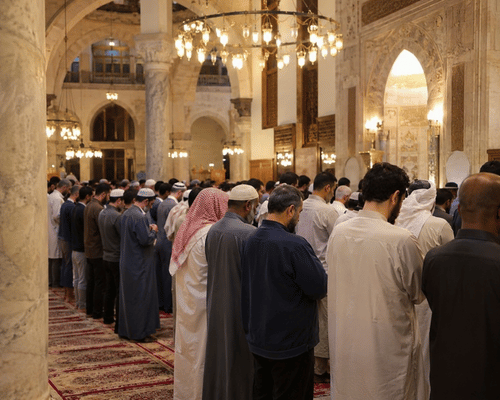
Taraweeh is the long night prayer offered in congregation through Ramadan. The name means "the rests", after the pauses taken between sets of units. It is strongly encouraged rather than obligatory, and mosques differ over how many units are prayed, with both of the common numbers well supported.
For the month itself, see Ramadan.
What the Name Means
A tarwiha is a single rest. Taraweeh is the plural - rests, in the ordinary sense of sitting down for a moment.
The prayer got its name from what happened between the praying. The early Muslims would pray four units, then sit and rest, then four more, then sit again. The pauses were long enough and regular enough that the whole thing came to be called after them.
Worth noticing. Of everything that could have given this prayer its name - its length, its timing, the Qur'an recited in it - what stuck was the sitting down.
The root also carries the sense of relief and refreshment, which is the same idea arriving from another direction.
Why It Stopped, and Why It Came Back
The history is short and it explains a great deal.
The Prophet Muhammad ﷺ prayed the night prayer in the mosque during Ramadan, and people gathered behind him. On the second night more came. On the third more still. On the fourth the mosque could not hold them - and he did not come out.
In the morning he explained. He had seen what they did, and nothing had prevented him from coming except that he feared it would be made obligatory upon them (reported in Sahih al-Bukhari and Sahih Muslim).
He stopped leading a prayer because people were praying it too well.
After his death, people prayed it alone or in small scattered groups, through the time of Abu Bakr and the early part of Umar's caliphate (Sahih al-Bukhari 2009).
"What an Excellent Innovation"
Then Umar ibn al-Khattab went into the mosque one night in Ramadan and found the congregation scattered - a man praying by himself, another with a few people behind him.
He said: in my view, it would be better to gather these people behind one reciter. And he did, appointing Ubayy ibn Ka'b to lead them.
Going in on a later night and seeing the people praying together behind their reciter, he said: what an excellent innovation this is (Sahih al-Bukhari 2010).
That line gets quoted a great deal, usually in an argument. What is less often quoted is the sentence immediately after it. Umar added that the prayer they were sleeping through was better than the one they were offering - meaning the last part of the night, which people at that time were missing by praying early.
So in the same breath in which he established the congregation, Umar noted that praying later would have been better. The arrangement he set up was a practical one, and he said so.
Scholars have written a good deal on what he meant by calling it an innovation, since the prayer itself is the Prophet's ﷺ own practice. The usual answer is that he was describing the arrangement - one imam, one congregation, every night - rather than the prayer.
Eight or Twenty
This is the question people actually arrive with, and it is genuinely disputed. Both positions rest on real evidence and both are held by serious scholars.
The case for eleven, usually prayed as eight plus witr. Aisha was asked how the Prophet ﷺ prayed in Ramadan. She said he never exceeded eleven units, in Ramadan or outside it - four, then four, then three (Sahih al-Bukhari 1147). A narration in the Muwatta reports that Umar instructed Ubayy ibn Ka'b and Tamim al-Dari to lead the people in eleven.
The case for twenty. Several reports from the generation after the Companions describe twenty as the practice established under Umar, and it became the position of the Hanafi, Shafi'i and Hanbali schools, with the Maliki school going higher still in Madinan practice. Abu Hanifa is reported to have answered a question about Umar's twenty by saying that Umar was not a man to invent something - he must have had evidence for it.
Both numbers are therefore traced back to the same caliph, which is why the argument has lasted.
What is agreed is this: the number is not the obligation. The prayer is voluntary, the length is open, and somebody praying eight with attention is not doing less than somebody praying twenty without it. A mosque that prays one number is not correcting a mosque that prays the other.
In a British Mosque
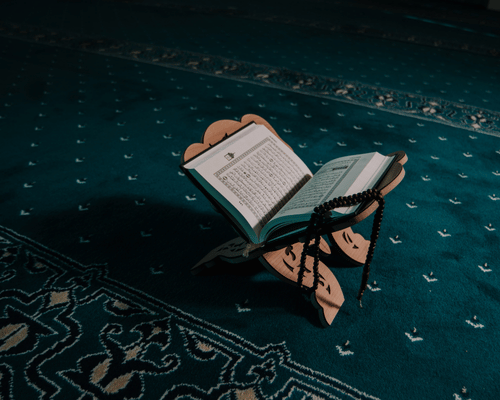
Most mosques here complete the entire Qur'an across the month, roughly a thirtieth each night, led by a hafiz - someone who has memorised it. By the twenty-seventh night or so, a reader who has attended throughout will have heard the whole book.
Pace varies enormously. Some mosques pray twenty units briskly in under an hour; others pray eight slowly and take longer. Neither is a measure of seriousness, and it is worth finding one that suits you rather than one that impresses you.
Women attend in many British mosques and pray at home in many others. Both are long-standing, and neither is a lesser option.
Praying at home is entirely valid. The congregation carries additional merit, and the Prophet ﷺ also taught that a person's voluntary prayer is better in their own house. Someone with young children, a night shift, or no mosque within reach has not missed out.
Frequently Asked Questions
No. It is a strongly emphasised sunnah - encouraged, rewarded, and not sinful to miss. Someone who cannot manage it has not done anything wrong. The obligation in Ramadan is the fast.
Yes, alone or with family. The mosque congregation carries its own reward, and for many people it is also what keeps them going through the month. But there is no requirement, and a prayer at home is a real prayer.
You may, and many do. Scholars differ over whether the witr should then be delayed to the end rather than prayed with the congregation. The simplest course is to pray witr with the imam and offer additional units later without repeating witr. If you want to pray in the last third of the night, you are aiming at what Umar himself said was better.
Yes. The prayer is valid and the reward is real, and most Muslims through history have stood in prayers they did not fully parse. That said, following a translation of the night's portion beforehand changes the experience entirely, and anyone attending a full khatm has thirty chances to try it.
Yes. Women prayed in the mosque in the Prophet's ﷺ time and British mosques increasingly make proper provision. Praying at home is equally valid and is what many prefer. This is a matter of circumstance and preference rather than permission.
Eight or Twenty
This is the question people actually arrive with, and it is genuinely disputed. Both positions rest on real evidence and both are held by serious scholars.
The case for eleven, usually prayed as eight plus witr. Aisha was asked how the Prophet ﷺ prayed in Ramadan. She said he never exceeded eleven units, in Ramadan or outside it - four, then four, then three (Sahih al-Bukhari 1147). A narration in the Muwatta reports that Umar instructed Ubayy ibn Ka'b and Tamim al-Dari to lead the people in eleven.
The case for twenty. Several reports from the generation after the Companions describe twenty as the practice established under Umar, and it became the position of the Hanafi, Shafi'i and Hanbali schools, with the Maliki school going higher still in Madinan practice. Abu Hanifa is reported to have answered a question about Umar's twenty by saying that Umar was not a man to invent something - he must have had evidence for it.
Both numbers are therefore traced back to the same caliph, which is why the argument has lasted.
What is agreed is this: the number is not the obligation. The prayer is voluntary, the length is open, and somebody praying eight with attention is not doing less than somebody praying twenty without it. A mosque that prays one number is not correcting a mosque that prays the other.
Most mosques here complete the entire Qur'an across the month, roughly a thirtieth each night, led by a hafiz - someone who has memorised it. By the twenty-seventh night or so, a reader who has attended throughout will have heard the whole book.
Pace varies enormously. Some mosques pray twenty units briskly in under an hour; others pray eight slowly and take longer. Neither is a measure of seriousness, and it is worth finding one that suits you rather than one that impresses you.
Women attend in many British mosques and pray at home in many others. Both are long-standing, and neither is a lesser option.
Praying at home is entirely valid. The congregation carries additional merit, and the Prophet ﷺ also taught that a person's voluntary prayer is better in their own house. Someone with young children, a night shift, or no mosque within reach has not missed out.
Frequently Asked Questions
No. It is a strongly emphasised sunnah - encouraged, rewarded, and not sinful to miss. Someone who cannot manage it has not done anything wrong. The obligation in Ramadan is the fast.
Yes, alone or with family. The mosque congregation carries its own reward, and for many people it is also what keeps them going through the month. But there is no requirement, and a prayer at home is a real prayer.
You may, and many do. Scholars differ over whether the witr should then be delayed to the end rather than prayed with the congregation. The simplest course is to pray witr with the imam and offer additional units later without repeating witr. If you want to pray in the last third of the night, you are aiming at what Umar himself said was better.
Yes. The prayer is valid and the reward is real, and most Muslims through history have stood in prayers they did not fully parse. That said, following a translation of the night's portion beforehand changes the experience entirely, and anyone attending a full khatm has thirty chances to try it.
Yes. Women prayed in the mosque in the Prophet's ﷺ time and British mosques increasingly make proper provision. Praying at home is equally valid and is what many prefer. This is a matter of circumstance and preference rather than permission.