Zakat
Zakat is a yearly payment that Muslims with enough savings must give to people in need. It is one of the five pillars of Islam. Those who qualify give a fixed share of their wealth-a fortieth, or 2.5%-once they have held it above a set threshold for a full lunar year.
What the Word Means
The Arabic root behind zakat carries two ideas at once: purity and growth. Handing over a set share of your wealth is described as cleaning what remains, and what remains is understood to grow rather than shrink. The same root gives tazkiyah, the word used for purifying the soul.
Zakah is the closer transliteration. Zakat is the spelling used in most English writing, including here.
It sits third among the five pillars, after the declaration of faith and the five daily prayers. One thing sets it apart from the others: it is owed to other people as well as to Allah. Islamic law therefore treats unpaid zakat as an outstanding debt rather than a missed opportunity.
Where the Obligation Comes From
The Qur'an mentions prayer and zakat side by side again and again, which is part of why the two are spoken of together (see, for example, Qur'an 2:43). One verse describes the payment as taken from a person's wealth in order to cleanse them and help them grow (Qur'an 9:103).
The list of people who may receive it is set out directly in Qur'an 9:60, which names eight groups. That verse is the reason zakat cannot simply be spent on any good cause.
The Prophet Muhammad ﷺ named zakat as one of the five things Islam is built on (Sahih al-Bukhari 8; Sahih Muslim 16). When he sent Mu'adh ibn Jabal to Yemen, he instructed him to teach the people that Allah had made a charity obligatory on them, taken from those among them who had wealth and returned to those among them who were poor — and warned him not to take people's most prized possessions (Sahih al-Bukhari 1395; Sahih Muslim 19).
The rate of a fortieth on money, gold and silver is established in the sunnah and agreed on by all four Sunni schools of law. The threshold below which nothing is owed, called the nisab, is likewise fixed by the sunnah, and is tied to set weights of gold and silver rather than to any currency.
Who Has to Pay
Four conditions are usually listed. You are Muslim. You are an adult of sound mind. Your qualifying wealth sits above the nisab. And it has stayed above it for one full lunar year.
That last condition is called the hawl. Because the Islamic year is around eleven days shorter than the calendar year, a zakat date moves gradually earlier each year. Choosing one date and keeping to it is far easier than working it out again from scratch each time.
There is a genuine difference of view on children. Scholars of the Hanafi school hold that zakat is not due on the wealth of a child or a person who lacks mental capacity. The Maliki, Shafi'i and Hanbali schools hold that it is due, and that whoever looks after their affairs should pay it on their behalf. Families often follow the position of the school they belong to.
Broadly, zakat applies to wealth that sits and grows: cash and savings, gold and silver, shares and investments, stock held by a business, and money lent out that you expect to get back. It does not apply to the home you live in, your car, your furniture or the tools you work with. A salary is not taxed as it arrives — what matters is what is still in your hands when your zakat date comes round.
HAF's Zakat Calculator holds the current nisab figure and does the arithmetic.
Who Can Receive It
The eight groups named in Qur'an 9:60, in plain English:
The poor (fuqara). People with little or nothing.
The needy (masakin). People whose income does not stretch far enough to cover what they need. Scholars have long discussed exactly where the line between these first two groups falls; in practice both describe people living below what their society considers enough.
Those employed to collect and distribute it (amilin). Historically the officials appointed to gather zakat, who were paid from it for that work.
Those whose hearts are to be brought closer (mu'allafat al-qulub). People newly drawn towards Islam or whose support was being sought. Scholars differ on whether this category still applies today. Some hold it lapsed after the Prophet's ﷺ lifetime; others consider it available.
Freeing people from bondage (fi'r-riqab). Historically the freeing of slaves. A number of contemporary scholars apply it to
releasing people from captivity or bonded labour.
People weighed down by debt (gharimin). Those who owe more than they can reasonably repay, provided the debt was not
run up through wrongdoing.
In the cause of Allah (fi sabilillah). Classically understood as those fighting in defence of the community. Contemporary
scholars read it more or less broadly, and this is where most disagreement about funding projects from zakat arises.
The stranded traveller (ibn as-sabil). Someone cut off from their money while away from home, however comfortable they
may be at home.
Some people are ruled out.
Zakat
cannot go to your own parents, grandparents, children, grandchildren or spouse, because
supporting them is already your responsibility. It cannot go to someone who is themselves wealthy. The family of the Prophet
صلى الله عليه وسلم
were classically excluded as well, in honour of their position, though some contemporary scholars allow it where they are in
need and nothing else is available.
Most people in the UK give through a charity, which acts as their agent and passes the money on to eligible recipients. It is
reasonable to ask any charity how its zakat policy works, who has approved it, and whether administration costs are taken
from zakat funds.
Zakat, Sadaqah and Zakat al-Fitr
Sadaqah
is voluntary and open-ended. It can be any amount, given at any time, to anyone, and it includes acts that involve no
money at all. Zakat is fixed, owed, and restricted to the eight groups above. Choosing to give more than you owe is generous;
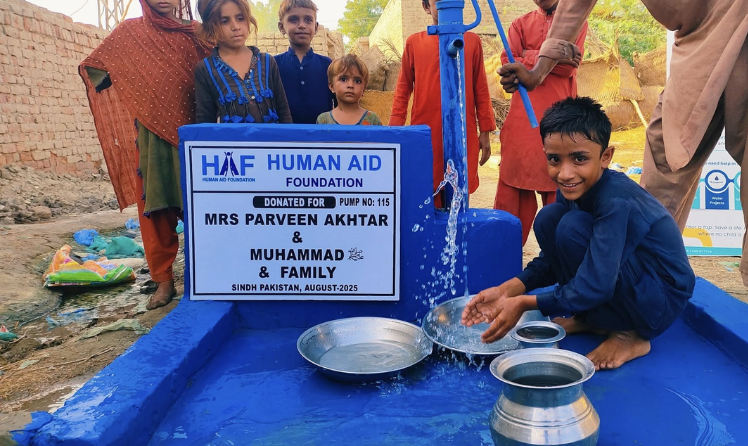
it does not reduce what was owed in the first place. Charity that keeps producing benefit over years-a well or a classroom-is
Sadaqah Jariyah
, which is a form of sadaqah rather than a way of paying zakat.
Zakat al-Fitr, often called Fitrana, is a separate and much smaller obligation. It is paid per person in a household at the end of
Ramadan, before the Eid prayer, and it is worked out as a measure of staple food rather than as a share of wealth. Having
savings is not a condition in the way it is for zakat. The two are easy to confuse because both are compulsory and both are paid
around the same time of year for many families.
You may also come across Lillah, used by UK charities for general donations given purely for Allah. Lillah is not a category of
its own in Islamic law and does not discharge a zakat obligation.
Frequently Asked Questions
Not to those you are already responsible for - parents, grandparents, children, grandchildren or a spouse. Other relatives are
a different matter. Siblings, aunts, uncles, cousins, nieces and nephews may all receive zakat if they qualify, and the Prophet صلى الله عليه وسلم
taught that charity given to a needy relative counts twice over: as charity, and as keeping family ties.
This is the most common disagreement UK Muslims run into. The Hanafi school holds that zakat is due on all gold and silver,
worn or stored. The Maliki, Shafi'i and Hanbali schools generally exempt jewellery kept for ordinary personal use. Many
women follow the position of their family's school. Ask a scholar if you are unsure which applies to you.
Money you owe generally reduces the wealth zakat is due on, but scholars differ over long-term debts. A common
contemporary position is to deduct only the payments falling due in the coming year, rather than the whole outstanding
mortgage, since deducting the full balance would remove almost everyone from the obligation.
It remains owed. Work back through those years as accurately as you can, estimate your qualifying wealth for each one, and
pay what you reasonably believe was due. Scholars treat an honest estimate as acceptable where records no longer exist.
Paying it off over time is better than leaving it.
No. It falls due on your own zakat anniversary, whatever month that lands in. Many people choose to pay during Ramadan
because good deeds are especially rewarded then, and because the month is easy to remember. If your date comes earlier,
paying early rather than late is the safer course.
 islamic terms
Sadaqah Jariyah
islamic termsNisab
Who Can Receive It
The eight groups named in Qur'an 9:60, in plain English:
The poor (fuqara). People with little or nothing.
The needy (masakin). People whose income does not stretch far enough to cover what they need. Scholars have long discussed exactly where the line between these first two groups falls; in practice both describe people living below what their society considers enough.
Those employed to collect and distribute it (amilin). Historically the officials appointed to gather zakat, who were paid from it for that work.
Those whose hearts are to be brought closer (mu'allafat al-qulub). People newly drawn towards Islam or whose support was being sought. Scholars differ on whether this category still applies today. Some hold it lapsed after the Prophet's ﷺ lifetime; others consider it available.
Freeing people from bondage (fi'r-riqab). Historically the freeing of slaves. A number of contemporary scholars apply it to releasing people from captivity or bonded labour.
People weighed down by debt (gharimin). Those who owe more than they can reasonably repay, provided the debt was not run up through wrongdoing.
In the cause of Allah (fi sabilillah). Classically understood as those fighting in defence of the community. Contemporary scholars read it more or less broadly, and this is where most disagreement about funding projects from zakat arises.
The stranded traveller (ibn as-sabil). Someone cut off from their money while away from home, however comfortable they may be at home.
Some people are ruled out. Zakat cannot go to your own parents, grandparents, children, grandchildren or spouse, because supporting them is already your responsibility. It cannot go to someone who is themselves wealthy. The family of the Prophet صلى الله عليه وسلم were classically excluded as well, in honour of their position, though some contemporary scholars allow it where they are in need and nothing else is available.
Most people in the UK give through a charity, which acts as their agent and passes the money on to eligible recipients. It is reasonable to ask any charity how its zakat policy works, who has approved it, and whether administration costs are taken from zakat funds.
Sadaqah is voluntary and open-ended. It can be any amount, given at any time, to anyone, and it includes acts that involve no money at all. Zakat is fixed, owed, and restricted to the eight groups above. Choosing to give more than you owe is generous; it does not reduce what was owed in the first place. Charity that keeps producing benefit over years-a well or a classroom-is Sadaqah Jariyah , which is a form of sadaqah rather than a way of paying zakat.
Zakat al-Fitr, often called Fitrana, is a separate and much smaller obligation. It is paid per person in a household at the end of Ramadan, before the Eid prayer, and it is worked out as a measure of staple food rather than as a share of wealth. Having savings is not a condition in the way it is for zakat. The two are easy to confuse because both are compulsory and both are paid around the same time of year for many families.
You may also come across Lillah, used by UK charities for general donations given purely for Allah. Lillah is not a category of its own in Islamic law and does not discharge a zakat obligation.
Frequently Asked Questions
Not to those you are already responsible for - parents, grandparents, children, grandchildren or a spouse. Other relatives are a different matter. Siblings, aunts, uncles, cousins, nieces and nephews may all receive zakat if they qualify, and the Prophet صلى الله عليه وسلم taught that charity given to a needy relative counts twice over: as charity, and as keeping family ties.
This is the most common disagreement UK Muslims run into. The Hanafi school holds that zakat is due on all gold and silver, worn or stored. The Maliki, Shafi'i and Hanbali schools generally exempt jewellery kept for ordinary personal use. Many women follow the position of their family's school. Ask a scholar if you are unsure which applies to you.
Money you owe generally reduces the wealth zakat is due on, but scholars differ over long-term debts. A common contemporary position is to deduct only the payments falling due in the coming year, rather than the whole outstanding mortgage, since deducting the full balance would remove almost everyone from the obligation.
It remains owed. Work back through those years as accurately as you can, estimate your qualifying wealth for each one, and pay what you reasonably believe was due. Scholars treat an honest estimate as acceptable where records no longer exist. Paying it off over time is better than leaving it.
No. It falls due on your own zakat anniversary, whatever month that lands in. Many people choose to pay during Ramadan because good deeds are especially rewarded then, and because the month is easy to remember. If your date comes earlier, paying early rather than late is the safer course.
Sadaqah Jariyah
Nisab