Yatim
Yatim is the Arabic word for an orphan. In Islamic usage it means a child whose father has died, whether or not the mother is alive. Orphanhood ends when the child reaches adulthood. The Qur'an gives orphans strong protection, especially over their property.
To support an orphan through HAF, see the Orphan Sponsorship appeal.
What the Word Means
The root behind yatim carries the sense of being alone, or of standing apart from others.
Arabic uses the same word in a way that sounds odd in English. A rare pearl that has no match is called a durra yatimah - a solitary pearl. The word points at being one of a kind as much as being bereaved.
You will see it written Yateem, Yatim or Yateem. Same word, different attempts at the same Arabic sound.
Who Counts, and Until When
Two things about the Islamic use of this word surprise English speakers.
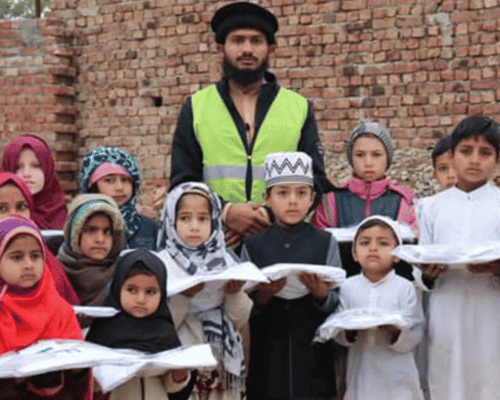
It is about the father. A yatim is a child whose father has died. The mother may be alive and caring for them. In English, "orphan" usually suggests both parents have died, which is why donors sometimes look at a sponsored child's photograph, see a mother standing beside them, and wonder what is going on.
The reason is practical. In the societies these rulings addressed, and in much of the world today, a father's death removed the household's income and its legal standing in a single stroke. A widow with young children was often left with no way to feed them and no one to speak for her.
It ends. The Prophet Muhammad ﷺ taught that there is no orphanhood once a child reaches adulthood. Someone who lost their father at six is a yatim; the same person at twenty-five is not. Their needs may continue, and helping them is still good, but the specific protections the word carries no longer apply.
Interestingly, for animals the word works the other way round. A young animal that has lost its mother is called yatim, because that is the parent it depends on. The word follows whoever the loss actually falls hardest on.
The Prophet ﷺ Was One
This is not a subject Islam addresses from a distance.
The Prophet Muhammad's ﷺ father died before he was born. His mother died when he was around six. His grandfather, who took him in, died two years later.
The Qur'an speaks to him about it directly, asking whether Allah did not find him an orphan and give him shelter, find him lost and guide him, find him in need and make him free of need. The verses that follow draw the conclusion: so do not oppress the orphan, and do not turn away the one who asks (Qur'an 93:6–10).
Their Property Is Not Yours
The Qur'an's strongest language about orphans concerns money.
Guardians are told to hand over orphans' property, and warned against quietly swapping something worthless for something good, or folding the child's wealth into their own (Qur'an 4:2). They are told to test a young person's judgement as they approach maturity, and to release their property once they are capable of handling it — without rushing to spend it first in case the child grows up and claims it (Qur'an 4:6).
Elsewhere the warning is blunt. Those who consume the property of orphans unjustly are described as swallowing fire (Qur'an 4:10). The Qur'an also instructs that an orphan's property should not be approached except in the way that is best, until they reach maturity (Qur'an 6:152).
The Prophet ﷺ listed consuming an orphan's wealth among seven ruinous sins, alongside taking a life unjustly and dealing in interest (reported in Sahih al-Bukhari and Sahih Muslim).
There is one allowance. A guardian who is genuinely poor may take a reasonable amount for the work of managing the child's affairs. A guardian who has enough should take nothing (Qur'an 4:6).
How They Should Be Treated
Money is not the whole of it.
Where a guardian's household and the orphan's affairs are mixed together, the Qur'an says that putting things right for them is what counts, and reminds guardians that these are their brothers (Qur'an 2:220). The point is not to hold a child at arm's length, but not to take advantage either.
Two short passages set the tone. One describes the person who denies the faith as the one who pushes the orphan away and does not urge the feeding of the poor (Qur'an 107:1–3). Another lists among the failings of a people that they do not honour the orphan (Qur'an 89:17).
The word in that second passage is worth pausing on. Not "feed" or "fund" — honour. Dignity is being asked for, not only support.
The Prophet ﷺ is reported to have said that the best house among the Muslims is one where an orphan is treated well, and the worst is one where an orphan is treated badly (reported in Sunan Ibn Majah).
Frequently Asked Questions
Not in the strict Islamic sense, which turns on the father. That does not mean such a child is not grieving or in need, and helping them is plainly good. It simply means the specific rules attached to the word - about guardianship and property - are framed around the loss of a father. Charities use the English word "orphan" more loosely than the Arabic term allows.
Only in narrow circumstances. A guardian who is well off should take nothing at all. One who is genuinely poor may take a reasonable amount in return for managing the child's affairs. Anything beyond that falls under the warnings above, and the Qur'an treats it as one of the gravest financial wrongs.
Yes. A child inherits from their father under the usual rules, and that inheritance is theirs. It is held for them and handed over when they are old enough to manage it. A grandchild whose father died before the grandfather is a more complicated case and is handled differently across the schools, so ask about any specific situation.
They are not a yatim, and Islamic law treats an abandoned or found child as a separate category with its own rules. Their need may be just as great. Voluntary charity can help anyone, so nothing prevents support reaching them; it is only the term that does not fit.
At adulthood, which scholars link to physical maturity rather than a fixed birthday. In practice charities and courts work to an age. That is a reasonable way of applying the principle, not a departure from it. What matters is that the protections are for childhood, not for life.
Their Property Is Not Yours
The Qur'an's strongest language about orphans concerns money.
Guardians are told to hand over orphans' property, and warned against quietly swapping something worthless for something good, or folding the child's wealth into their own (Qur'an 4:2). They are told to test a young person's judgement as they approach maturity, and to release their property once they are capable of handling it — without rushing to spend it first in case the child grows up and claims it (Qur'an 4:6).
Elsewhere the warning is blunt. Those who consume the property of orphans unjustly are described as swallowing fire (Qur'an 4:10). The Qur'an also instructs that an orphan's property should not be approached except in the way that is best, until they reach maturity (Qur'an 6:152).
The Prophet ﷺ listed consuming an orphan's wealth among seven ruinous sins, alongside taking a life unjustly and dealing in interest (reported in Sahih al-Bukhari and Sahih Muslim).
There is one allowance. A guardian who is genuinely poor may take a reasonable amount for the work of managing the child's affairs. A guardian who has enough should take nothing (Qur'an 4:6).
Money is not the whole of it.
Where a guardian's household and the orphan's affairs are mixed together, the Qur'an says that putting things right for them is what counts, and reminds guardians that these are their brothers (Qur'an 2:220). The point is not to hold a child at arm's length, but not to take advantage either.
Two short passages set the tone. One describes the person who denies the faith as the one who pushes the orphan away and does not urge the feeding of the poor (Qur'an 107:1–3). Another lists among the failings of a people that they do not honour the orphan (Qur'an 89:17).
The word in that second passage is worth pausing on. Not "feed" or "fund" — honour. Dignity is being asked for, not only support.
The Prophet ﷺ is reported to have said that the best house among the Muslims is one where an orphan is treated well, and the worst is one where an orphan is treated badly (reported in Sunan Ibn Majah).
Frequently Asked Questions
Not in the strict Islamic sense, which turns on the father. That does not mean such a child is not grieving or in need, and helping them is plainly good. It simply means the specific rules attached to the word - about guardianship and property - are framed around the loss of a father. Charities use the English word "orphan" more loosely than the Arabic term allows.
Only in narrow circumstances. A guardian who is well off should take nothing at all. One who is genuinely poor may take a reasonable amount in return for managing the child's affairs. Anything beyond that falls under the warnings above, and the Qur'an treats it as one of the gravest financial wrongs.
Yes. A child inherits from their father under the usual rules, and that inheritance is theirs. It is held for them and handed over when they are old enough to manage it. A grandchild whose father died before the grandfather is a more complicated case and is handled differently across the schools, so ask about any specific situation.
They are not a yatim, and Islamic law treats an abandoned or found child as a separate category with its own rules. Their need may be just as great. Voluntary charity can help anyone, so nothing prevents support reaching them; it is only the term that does not fit.
At adulthood, which scholars link to physical maturity rather than a fixed birthday. In practice charities and courts work to an age. That is a reasonable way of applying the principle, not a departure from it. What matters is that the protections are for childhood, not for life.