Zakat-al-fitr
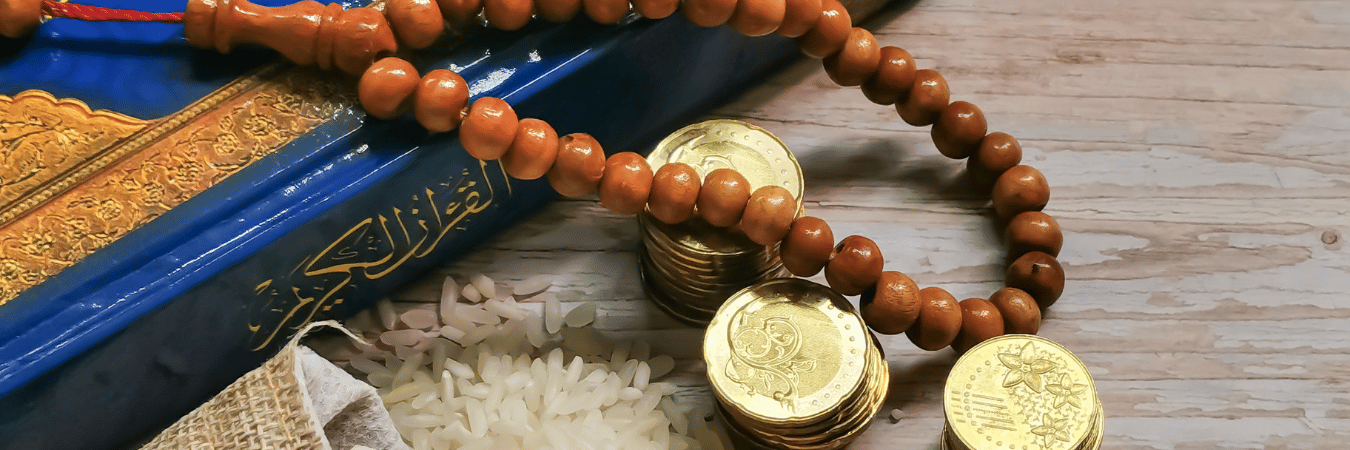
Zakat al-Fitr is a small charity payment made at the end of Ramadan. Many people call it Fitrana. One payment is due for each person in the home, and it must reach the poor before the Eid prayer. Young children are counted too.
What the Name Means
Fitr means the breaking of a fast. You can hear the same word in iftar, the evening meal that ends each day's fast, and in Eid al-Fitr, the festival that ends the month.
So the name simply means the charity of breaking the fast. It is also called Sadaqat al-Fitr. In the UK, most people say Fitrana. All three names mean the same thing.
Why It Is Given
There are two reasons, and both come from the same teaching of the Prophet Muhammad ﷺ.
The first is to make up for small slips during the fast. Nobody fasts perfectly. Harsh words and wasted talk creep in. This payment helps to clean up what was missed.
The second is to feed people who have very little. Eid is a happy day. Nobody should spend it hungry while everyone else is eating well. Paying early means the food arrives in time to be used.
This teaching is reported in Sunan Abu Dawud and Sunan Ibn Majah, from Ibn Abbas (may Allah be pleased with him).
Who Pays It
Almost every Muslim pays. You do not need savings or a job. You only need to have a little more than your family needs for Eid day itself.
One person usually pays for the whole household. A parent pays for their children. A husband often pays for his wife, though she may pay for herself if she prefers.
There is a small difference between the schools on who has enough to pay. Hanafi scholars say a person should hold spare wealth at the nisab level, which is the same Nisab used for Zakat, though here you do not have to hold it for a year. The Maliki, Shafi'i and Hanbali schools ask for much less: only that you have food to spare beyond what your family needs over Eid.
Either way, far more people owe Fitrana than owe Zakat. Many families who pay no Zakat at all still pay this.
How Much Is Due
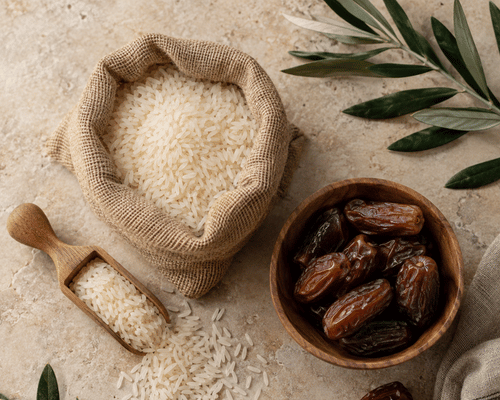
The Prophet ﷺ set the amount as one sa' of everyday food. A sa' is an old measure, taken by volume rather than weight. In modern terms it works out at roughly two and a half to three kilograms, depending on the food being measured.
Hanafi scholars treat half a sa' of wheat as equal to a full sa' of dates or barley, because wheat was worth more.
You will not need to weigh anything. UK charities work out the cash value each year and publish a set amount per person. Check HAF's current Fitrana amount during Ramadan, as the price of food changes every year.
The evidence for the amount and the timing comes from Ibn Umar (may Allah be pleased with him), who reported that the Prophet ﷺ made this payment a duty of one sa' of dates or barley, on every Muslim, young or old, male or female, and ordered that it be given before people left for the Eid prayer (Sahih al-Bukhari 1503; Sahih Muslim 984).
Food or Money?
This is the question people ask most, and the schools do not agree.
Hanafi scholars allow you to give the cash value instead of the food. Their reasoning is that the aim is to feed a poor person, and money does that just as well. It often does it better, because the family can buy what they actually need.
Maliki, Shafi'i and Hanbali scholars hold that the food itself should be given, as that is what the Prophet ﷺ named.
In practice, every UK charity collects Fitrana as money and buys food locally with it. That follows the Hanafi view. If you follow one of the other schools, ask a scholar you trust before paying by card.
When to Pay
It must reach the poor before the Eid prayer. That is the part people get wrong most often.
Paying a day or two early is fine, and was the normal practice of the Companions. Many scholars allow you to pay earlier still, during Ramadan itself. Giving to a charity a week or two before Eid is usually safest, since the money has to travel and the food has to be bought.
If you miss the prayer, pay anyway. The duty does not disappear. But scholars explain that a late payment no longer counts as Zakat al-Fitr in the full sense; it becomes ordinary charity instead. That is a reason to pay early, not a reason to skip it.
Who Receives It
The poor and the needy. Most scholars keep it to these two groups, since the aim is to put food on a table on Eid day. Some allow it to go to the other groups who may receive Zakat.
Scholars also differ on sending it abroad. The Shafi'i school prefers it to stay in the area where the giver lives. Hanafi scholars allow it to be sent to wherever the need is greater. Most UK charities send it overseas on that basis.You may give one person's Fitrana to one poor person, or pool it with others. Both are accepted.
How It Differs from Zakat, Fidya and Kaffarah
Four payments come up around Ramadan and they are easy to mix up.
Zakat
is worked out from your wealth. You pay it once a year, only if your savings pass the nisab, and it is a much larger amount. Read more about
Zakat
.
Zakat al-Fitr
is worked out per person, not per pound. A large family with little money may owe several payments of it while owing no Zakat at all.
Fidya
is paid by someone who cannot fast at all, such as a person with a long-term illness. It covers the missed fasts.
Kaffarah
is paid by someone who broke a fast on purpose without a good reason. It is a much heavier payment.
Fidya and Kaffarah depend on your own circumstances. Fitrana does not. HAF handles both through its
Fidya and Kaffarah Appeal.

Frequently Asked Questions
Yes. This payment is not tied to fasting. Anyone who missed Ramadan through illness, travel, pregnancy or menstruation still pays it, as does an elderly person who cannot fast at all. Someone who paid Fidya for missed fasts pays this as well. They are separate duties and one does not replace the other.
Many scholars say yes, and charities accept it throughout the month. Paying early is helpful, because food has to be bought and delivered before Eid. Some scholars prefer it closer to the end of Ramadan, since the duty settles then. Nobody holds that paying a few days early is a problem.
Pay it as soon as you remember. Scholars agree the money is still owed and should still go to someone poor. It will not count in the same way as a payment made on time, but leaving it unpaid is worse. Set a reminder for the middle of Ramadan next year.
Only if you support them and they depend on you. A grown-up son with his own income pays for himself. If you are unsure whether someone counts as your dependant, it is safer to pay, since the amount is small.
How Much Is Due
The Prophet ﷺ set the amount as one sa' of everyday food. A sa' is an old measure, taken by volume rather than weight. In modern terms it works out at roughly two and a half to three kilograms, depending on the food being measured.
Hanafi scholars treat half a sa' of wheat as equal to a full sa' of dates or barley, because wheat was worth more.
You will not need to weigh anything. UK charities work out the cash value each year and publish a set amount per person. Check HAF's current Fitrana amount during Ramadan, as the price of food changes every year.
The evidence for the amount and the timing comes from Ibn Umar (may Allah be pleased with him), who reported that the Prophet ﷺ made this payment a duty of one sa' of dates or barley, on every Muslim, young or old, male or female, and ordered that it be given before people left for the Eid prayer (Sahih al-Bukhari 1503; Sahih Muslim 984).
This is the question people ask most, and the schools do not agree.
Hanafi scholars allow you to give the cash value instead of the food. Their reasoning is that the aim is to feed a poor person, and money does that just as well. It often does it better, because the family can buy what they actually need.
Maliki, Shafi'i and Hanbali scholars hold that the food itself should be given, as that is what the Prophet ﷺ named.
In practice, every UK charity collects Fitrana as money and buys food locally with it. That follows the Hanafi view. If you follow one of the other schools, ask a scholar you trust before paying by card.
It must reach the poor before the Eid prayer. That is the part people get wrong most often.
Paying a day or two early is fine, and was the normal practice of the Companions. Many scholars allow you to pay earlier still, during Ramadan itself. Giving to a charity a week or two before Eid is usually safest, since the money has to travel and the food has to be bought.
If you miss the prayer, pay anyway. The duty does not disappear. But scholars explain that a late payment no longer counts as Zakat al-Fitr in the full sense; it becomes ordinary charity instead. That is a reason to pay early, not a reason to skip it.
The poor and the needy. Most scholars keep it to these two groups, since the aim is to put food on a table on Eid day. Some allow it to go to the other groups who may receive Zakat.
You may give one person's Fitrana to one poor person, or pool it with others. Both are accepted.
Four payments come up around Ramadan and they are easy to mix up.
Zakat is worked out from your wealth. You pay it once a year, only if your savings pass the nisab, and it is a much larger amount. Read more about Zakat .
Zakat al-Fitr is worked out per person, not per pound. A large family with little money may owe several payments of it while owing no Zakat at all.
Fidya is paid by someone who cannot fast at all, such as a person with a long-term illness. It covers the missed fasts.
Kaffarah is paid by someone who broke a fast on purpose without a good reason. It is a much heavier payment.
Fidya and Kaffarah depend on your own circumstances. Fitrana does not. HAF handles both through its Fidya and Kaffarah Appeal.
Frequently Asked Questions
Yes. This payment is not tied to fasting. Anyone who missed Ramadan through illness, travel, pregnancy or menstruation still pays it, as does an elderly person who cannot fast at all. Someone who paid Fidya for missed fasts pays this as well. They are separate duties and one does not replace the other.
Many scholars say yes, and charities accept it throughout the month. Paying early is helpful, because food has to be bought and delivered before Eid. Some scholars prefer it closer to the end of Ramadan, since the duty settles then. Nobody holds that paying a few days early is a problem.
Pay it as soon as you remember. Scholars agree the money is still owed and should still go to someone poor. It will not count in the same way as a payment made on time, but leaving it unpaid is worse. Set a reminder for the middle of Ramadan next year.
Only if you support them and they depend on you. A grown-up son with his own income pays for himself. If you are unsure whether someone counts as your dependant, it is safer to pay, since the amount is small.