Chichester Prayer Times
Chichester was founded as a Roman town and has been a centre of Christian worship since its cathedral was built in 1075, sitting today on England's south coast in West Sussex. Its Muslim community follows the same five daily prayers as anywhere else in the UK, worked out for exactly where the city sits. This page covers how Chichester's prayer times are worked out, why they change through the year, and how to find Qibla direction from the city.
Chichester's Prayer Times on the South Coast
Chichester sits at around 50.8 degrees latitude, one of the more southerly cities in England, which gives it a gentler seasonal swing in daylight than most of the UK. Even so, Fajr and Isha still move by a real margin between the shortest days of December and the longest days of June.
Rather than trying to work out sunrise and sunset by hand, a Prayer Timetable built for Chichester's own location gives exact Fajr, Dhuhr, Asr, Maghrib and Isha times, updating on its own as the seasons move through the year.
Chichester's Prayer Times Across the Seasons
Prayer times shift daily because the Earth is tilted on its axis, and this changes the sun's path across the sky through the year. In summer, Chichester sees an earlier sunrise and a later sunset, so Fajr comes earlier and Isha comes later. In winter, sunrise and sunset draw closer together.
This isn't specific to Chichester, or West Sussex, or even the UK. The same pattern plays out everywhere on Earth. What changes from place to place is simply how wide that seasonal gap becomes, and that depends on how far north or south a location sits. Since Chichester sits further south than most English cities, its seasonal swing is gentler than average.
What Sets Chichester's Daily Prayer Times
Every prayer time comes from two pieces of information working together: the angle of the sun below the horizon at a set moment, and the exact coordinates of the location. Calculation software combines both to produce a full daily timetable.
Calculation Methods in Use Across Britain
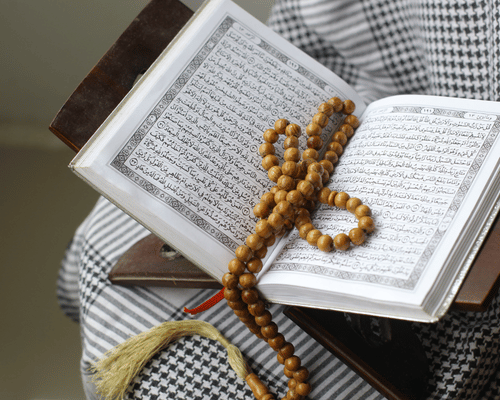
A number of calculation methods are used across the UK, and they mostly differ in how they define the twilight angle used for Fajr and Isha. The Muslim World League method is widely used, and some Chichester-area timetables reference the Umm al-Qura method used in Makkah itself, alongside methods built for higher-latitude parts of the country.
Many mosques apply a small adjustment on top of a base method, usually just for Fajr and Isha in summer, to keep prayer times sensible for everyday life.
Why a Timetable Might Differ by a Few Minutes
Seeing a few minutes' difference between two Chichester prayer timetables is entirely normal and isn't a sign of an error. It usually comes down to the calculation method chosen, the scholarly view followed on Asr, or how an organisation manages the UK's summer twilight. Picking one dependable source and sticking with it is the simplest way to keep a steady daily routine.
Chichester's True Direction Towards Makkah
Qibla is the direction Muslims face during Salah, pointing towards the Kaaba in Makkah. It's worked out using the great-circle method, which finds the shortest path across the Earth's curved surface, rather than a straight line drawn on a flat map.
From Chichester, this comes to approximately 117.7 degrees from true north, roughly south-east. It's worth knowing that a basic phone compass usually points to magnetic north rather than true north, and in Chichester the two are around 1.4 degrees apart, giving a compass reading of roughly 119 degrees against a true bearing closer to 118 degrees. A dedicated Qibla compass app, which corrects for this magnetic variation and uses your phone's GPS alongside its compass, will give you a more reliable reading than a standard compass on its own.
The Value of a Dependable Timetable
Trying to work out sunrise and sunset by eye, especially on an overcast day, is far less reliable than using a proper timetable built for Chichester's own location. A timetable like this gives exact Fajr, Dhuhr, Asr, Maghrib and Isha times for each day and updates itself automatically as the seasons change.
This matters even more during Ramadan, when Suhoor and Iftar are set directly by Fajr and Maghrib. It's also worth checking the Islamic Calendar, which lists the year's key dates alongside the lunar month, for anyone planning ahead.
Prayer's Call to Generosity
Daily prayers remind us not only of our relationship with Allah but also of our responsibility to help those in need through acts of charity. Stopping five times a day gives natural space to think, and that often leads to thinking about people whose lives are much harder than our own.
This is part of why charity sits so close to prayer in Islamic life. Zakat, given once a year, and Sadaqah, given whenever someone chooses, both turn that thinking into real support. Some choose Sadaqah Jariyah, ongoing charity that keeps helping people long after it is given, such as giving to a Water Appeal or a project to Build a Masjid.
Others give towards urgent needs, such as the Gaza Emergency Appeal, or take on a longer-term role by choosing to Sponsor an Orphan. Neither one takes the place of the five daily prayers, but both fit naturally alongside them as part of a wider life of faith.
Every UK city has its own prayer clock, simply because of where it sits. Portsmouth prayer times and Brighton & Hove sit closest to Chichester's own, given how near these cities are along the south coast.
Further afield, cities such as Prayer Times in London and Milton Keynes see a wider seasonal swing than Chichester, since they sit further north. Checking a city's own timetable directly is always more reliable than assuming times carry over from somewhere else.
To Close
Using an accurate, regularly updated prayer timetable makes it much easier to stay on track with daily worship as Chichester's daylight hours change through the year. As each prayer comes around, it's worth remembering that the same faith that calls us to pray on time also calls us to look outward, through charity, towards those who need our support.
Frequently Asked Questions
There's no single fixed time, since Fajr follows the sun's position and changes with it each day. It also depends on which calculation method is used, which is why checking a live Prayer Timetable for Chichester gives a far more accurate answer than a fixed figure.
Qibla from Chichester sits at approximately 117.7 degrees from true north, roughly south-east, worked out using the great-circle method towards Makkah. Since a standard phone compass points to magnetic north rather than true north, a Qibla compass app that corrects for this will give you a more exact reading for your own location.
Small differences usually come from the calculation method used, the view taken on Asr, or how an organisation handles the UK's summer twilight. None of this means a mistake has been made. These are simply real differences in scholarly opinion, and sticking with one reliable source keeps your own routine steady.
Calculation Methods in Use Across Britain
A number of calculation methods are used across the UK, and they mostly differ in how they define the twilight angle used for Fajr and Isha. The Muslim World League method is widely used, and some Chichester-area timetables reference the Umm al-Qura method used in Makkah itself, alongside methods built for higher-latitude parts of the country.
Many mosques apply a small adjustment on top of a base method, usually just for Fajr and Isha in summer, to keep prayer times sensible for everyday life.
Seeing a few minutes' difference between two Chichester prayer timetables is entirely normal and isn't a sign of an error. It usually comes down to the calculation method chosen, the scholarly view followed on Asr, or how an organisation manages the UK's summer twilight. Picking one dependable source and sticking with it is the simplest way to keep a steady daily routine.
Qibla is the direction Muslims face during Salah, pointing towards the Kaaba in Makkah. It's worked out using the great-circle method, which finds the shortest path across the Earth's curved surface, rather than a straight line drawn on a flat map.
From Chichester, this comes to approximately 117.7 degrees from true north, roughly south-east. It's worth knowing that a basic phone compass usually points to magnetic north rather than true north, and in Chichester the two are around 1.4 degrees apart, giving a compass reading of roughly 119 degrees against a true bearing closer to 118 degrees. A dedicated Qibla compass app, which corrects for this magnetic variation and uses your phone's GPS alongside its compass, will give you a more reliable reading than a standard compass on its own.
Trying to work out sunrise and sunset by eye, especially on an overcast day, is far less reliable than using a proper timetable built for Chichester's own location. A timetable like this gives exact Fajr, Dhuhr, Asr, Maghrib and Isha times for each day and updates itself automatically as the seasons change.
This matters even more during Ramadan, when Suhoor and Iftar are set directly by Fajr and Maghrib. It's also worth checking the Islamic Calendar, which lists the year's key dates alongside the lunar month, for anyone planning ahead.
Daily prayers remind us not only of our relationship with Allah but also of our responsibility to help those in need through acts of charity. Stopping five times a day gives natural space to think, and that often leads to thinking about people whose lives are much harder than our own.
This is part of why charity sits so close to prayer in Islamic life. Zakat, given once a year, and Sadaqah, given whenever someone chooses, both turn that thinking into real support. Some choose Sadaqah Jariyah, ongoing charity that keeps helping people long after it is given, such as giving to a Water Appeal or a project to Build a Masjid.
Others give towards urgent needs, such as the Gaza Emergency Appeal, or take on a longer-term role by choosing to Sponsor an Orphan. Neither one takes the place of the five daily prayers, but both fit naturally alongside them as part of a wider life of faith.
Every UK city has its own prayer clock, simply because of where it sits. Portsmouth prayer times and Brighton & Hove sit closest to Chichester's own, given how near these cities are along the south coast.
Further afield, cities such as Prayer Times in London and Milton Keynes see a wider seasonal swing than Chichester, since they sit further north. Checking a city's own timetable directly is always more reliable than assuming times carry over from somewhere else.
Using an accurate, regularly updated prayer timetable makes it much easier to stay on track with daily worship as Chichester's daylight hours change through the year. As each prayer comes around, it's worth remembering that the same faith that calls us to pray on time also calls us to look outward, through charity, towards those who need our support.
Frequently Asked Questions
There's no single fixed time, since Fajr follows the sun's position and changes with it each day. It also depends on which calculation method is used, which is why checking a live Prayer Timetable for Chichester gives a far more accurate answer than a fixed figure.
Qibla from Chichester sits at approximately 117.7 degrees from true north, roughly south-east, worked out using the great-circle method towards Makkah. Since a standard phone compass points to magnetic north rather than true north, a Qibla compass app that corrects for this will give you a more exact reading for your own location.
Small differences usually come from the calculation method used, the view taken on Asr, or how an organisation handles the UK's summer twilight. None of this means a mistake has been made. These are simply real differences in scholarly opinion, and sticking with one reliable source keeps your own routine steady.