Wolverhampton Prayer Times
Wolverhampton Prayer Times
Muslims pray five times a day: Fajr, Dhuhr, Asr, Maghrib, and Isha. These times follow the sun, so they shift a little every day. That's why it helps to check an up-to-date timetable for Wolverhampton rather than relying on an old one.
For many Muslims, these five daily pauses are more than just a routine. They're a chance to step back from work, family, and daily stress, and reconnect with Allah. They can also be a reminder to think about people who are struggling - with poverty, hunger, or hardship - and to look for ways to help, for example through causes like Zakat, Sadaqah, or food and water support.
Sunrise, Sunset, and the Seasons
Sunrise and sunset mark the start and end points of the day's prayers - Fajr is linked to dawn, and Maghrib begins at sunset. In the UK, daylight hours change quite a bit across the year, so prayer times shift noticeably between summer and winter. This is another reason to check a current timetable rather than a fixed one.
Why Prayer Times Differ Between Apps and Websites
You may have noticed that two prayer time apps sometimes show slightly different times for the same day. This usually comes down to the calculation method being used.
Different methods use different astronomical settings to work out when Fajr and Isha begin, since both are based on twilight, which is harder to pin down precisely than sunrise or sunset. Asr times can also differ depending on which juristic approach is used to measure shadow length.
None of this means one timetable is "wrong" - it usually just reflects a different calculation setting. If your mosque follows a particular timetable, it's often simplest to stick with that one, especially for congregational prayers.
Finding the Qibla Direction in Wolverhampton
The Qibla is the direction Muslims face during Salah, towards the Ka'bah in Makkah. If you need to find it while in Wolverhampton, whether at work, in a hotel, or somewhere unfamiliar, a location-based Qibla finder or compass app can help. The Qibla direction from Wolverhampton is approximately 117°.
Google's Qibla Finder, for instance, uses your location to calculate the direction to the Ka'bah. Google recommends calibrating your phone's compass before using it, as accuracy can depend on your device and surroundings. If you're ever unsure, compare the result with the direction already used at your local mosque.
Jummah (Friday) Prayer
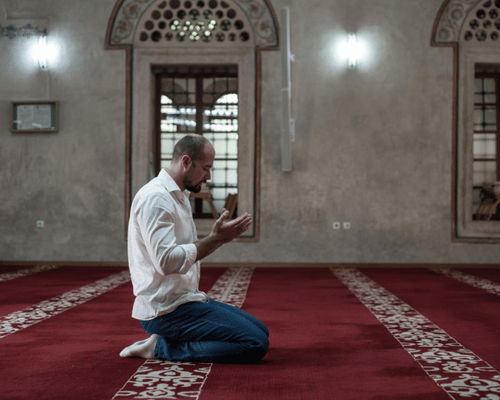
- Jummah is the Friday congregational prayer, and it works a bit differently from the daily Dhuhr prayer. Each mosque sets its own Jummah schedule, so it's worth checking with your mosque directly rather than assuming the calculated Dhuhr time is when Jummah starts.
If Friday is part of your routine, it can also be a natural moment to build in giving. Some people use Friday as a regular day for Sadaqah donations, alongside attending Jummah.
Travelling to Another City?
Prayer times are location-specific, so if you're travelling elsewhere in the UK, check the timetable for wherever you're headed rather than sticking with Wolverhampton's times. If your journey takes you to Birmingham, London, Leicester, Coventry, or Nottingham, you can find prayer times for each of those cities on our site.
Giving Back: Zakat and Sadaqah
Salah often naturally brings up thoughts about people facing hardship, and many Muslims like to turn that into action through charitable giving.
Human Aid Foundation UK offers a few ways to do this. The Zakat Appeal follows what HAF describes as a 100% Zakat donation policy, and comes with a Zakat Calculator to help you work out what you owe based on your assets and liabilities. The Sadaqah Appeal supports things like food packs, clean water, and emergency aid. There's also a Friday Giving Appeal for those who want to make giving a regular part of their Friday routine, along with other appeals covering orphan sponsorship and emergency relief.
You don't need a special occasion to give. Some people donate after Jummah, others during Ramadan, and some simply whenever they're able.
Frequently Asked Questions
Fajr, Dhuhr, Asr, Maghrib, and Isha - tied to dawn, midday, afternoon, sunset, and nightfall.
Because they follow the sun's position, which shifts throughout the year.
Not always. The timetable shows when the prayer period begins; your mosque may hold Jama'ah at a slightly different time. Check with them directly.
Use a location-based Qibla finder, like Google's, or a calibrated compass app.