Liverpool Prayer Times
How Are Prayer Times Calculated for Liverpool?
Prayer times aren't fixed on a calendar the way, say, office hours are. They follow the sun. Fajr, Dhuhr, Asr, Maghrib and Isha all shift slightly from one day to the next because sunrise, solar noon and sunset themselves shift throughout the year. That's the whole reason it's worth checking today's timetable rather than glancing back at yesterday's and assuming it still applies.
To work out these times for Liverpool, we rely on established astronomical calculations built around the city's exact geographical coordinates. You might spot a difference of a few minutes between our timings and those from another provider or a local mosque — that's normal, and it usually comes down to which calculation method has been used for Fajr, Isha and Asr specifically. If you pray in congregation, the safest bet is to go with whatever timetable your mosque publishes.
At Human Aid Foundation, we put together accurate UK prayer times alongside other Islamic resources, so staying on top of your daily worship doesn't have to be a hassle. Whether you need today's times for Liverpool, want to check the Qibla direction, or are looking for guidance ahead of Ramadan, that's what our resources are there for.
Qibla Direction from Liverpool
The Qibla is simply the direction every Muslim faces in prayer - towards the Ka'bah in Makkah. From Liverpool, that works out to 117°, measured clockwise from true north - so wherever in the city you happen to be, that's the bearing you're aiming for. Getting that direction right is a core part of Salah, and the tools available today work it out using your coordinates and some straightforward mathematics, so you can pray confidently whether you're at home, at your desk, or somewhere you've never been before.
If you find yourself praying somewhere new, taking thirty seconds to double-check the Qibla direction beforehand can save you from second-guessing yourself mid-prayer. A lot of people just bookmark a Qibla page for exactly this reason -quick to reach for when you're away from your usual spot, with Liverpool's 117° bearing already worked out for them.
Why It Matters
Different Islamic organisations may use different calculation methods, particularly for Fajr and Isha. This can sometimes result in small differences between prayer timetables.
""So turn your face toward al-Masjid al-Haram." "
— (Qur'an 2:144)
It's not just a physical gesture. Facing the Qibla is an act of obedience, and a quiet reminder that you're part of a much bigger Ummah, all facing the same way, all at once.
Checking Both Together
It's worth getting into the habit of checking the Qibla direction alongside the day's prayer times, especially if you're heading out somewhere unfamiliar. And if you split your time between Liverpool and other parts of the UK, don't assume the timings carry over — even a short distance can shift things, so it's worth pulling up the schedule for wherever you're headed before you travel.
Human Aid Foundation also covers prayer times for other UK cities - Manchester, Birmingham, London, Leicester, Nottingham, Sheffield, Derby and Coventry among them - so you can always find the right timetable no matter where your journey takes you.
The Five Daily Prayers
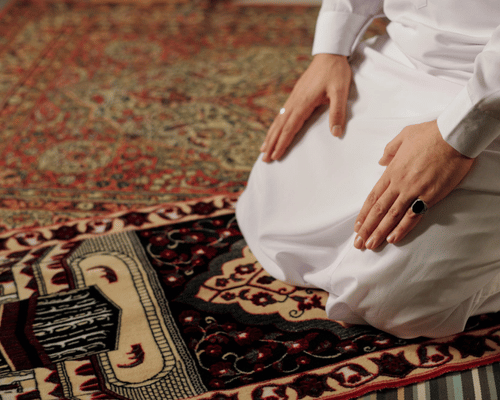
Each day brings five obligatory prayers, and each one is tied to where the sun sits in the sky. Fajr falls before sunrise. Dhuhr begins once the sun has passed its highest point. Asr comes in the afternoon. Maghrib starts right after sunset, and Isha once the last light of evening twilight has faded.
Because none of this is locked to a fixed clock time, the schedule moves slightly every single day. Getting into the habit of checking today's Namaz Time for Liverpool - rather than assuming it matches yesterday's - makes it much easier to plan the rest of your day around it.
For a lot of people, glancing at the prayer timetable has simply become part of the morning routine, one small habit that helps everything else - work, school, family - fall into place around Salah rather than the other way round.
Why the Times Shift With the Seasons
Liverpool sees a real swing between summer and winter daylight, and that swing shows up directly in the prayer schedule.
Come summer, the sun is up earlier and down later, which pushes Fajr earlier and pulls Maghrib and Isha later into the evening. Winter flips that: shorter days mean a later Fajr, while Maghrib and Isha both arrive earlier.
None of this is unusual - it's just the timetable doing what it's supposed to do. It's also exactly why leaning on today's figures beats working off an old monthly printout without double-checking.
Why Is Facing the Qibla Important?
Muslims face the Qibla during Salah as part of the requirements of prayer. It is the direction towards the Kaaba and represents the unity of Muslims around the world in worship.
Come summer, the sun is up earlier and down later, which pushes Fajr earlier and pulls Maghrib and Isha later into the evening. Winter flips that: shorter days mean a later Fajr, while Maghrib and Isha both arrive earlier.
None of this is unusual - it's just the timetable doing what it's supposed to do. It's also exactly why leaning on today's figures beats working off an old monthly printout without double-checking.
Why Timetables Don't Always Match
It's fairly common to see a small gap — usually just a few minutes — between the times listed on different websites or apps. This comes down to the calculation method used, particularly for Fajr, Isha and Asr, where scholarly opinion allows for some variation.
Across the UK, most Islamic organisations lean on well-established international methods, though individual mosques sometimes adjust slightly for their own congregational prayers. If you attend a mosque regularly, its published Jama'ah timetable is generally the one to trust.
And if you're often on the move around the country, keep in mind that every city runs on its own schedule based on its location. Before you head off, it's worth checking our pages for Manchester, Birmingham, Leicester, Nottingham, Sheffield and other UK cities to make sure you've got accurate times wherever you land.
Frequently Asked Questions
The Qibla direction from Liverpool is 117°, measured clockwise from true north, pointing towards the Ka'bah in Makkah. This bearing stays the same year-round, unlike prayer times, which shift daily with the sun.
Prayer times are based on the sun's position rather than a fixed clock, so Fajr, Dhuhr, Asr, Maghrib and Isha shift slightly each day as sunrise, solar noon and sunset change throughout the year.
Small differences of a few minutes usually come down to the calculation method used for Fajr, Isha and Asr. Different Islamic organisations follow different recognised scholarly methods, and local mosques may adjust slightly for congregational prayers.